Miao Dao: The Chinese Long Saber of Power, Speed, and Battlefield Precision
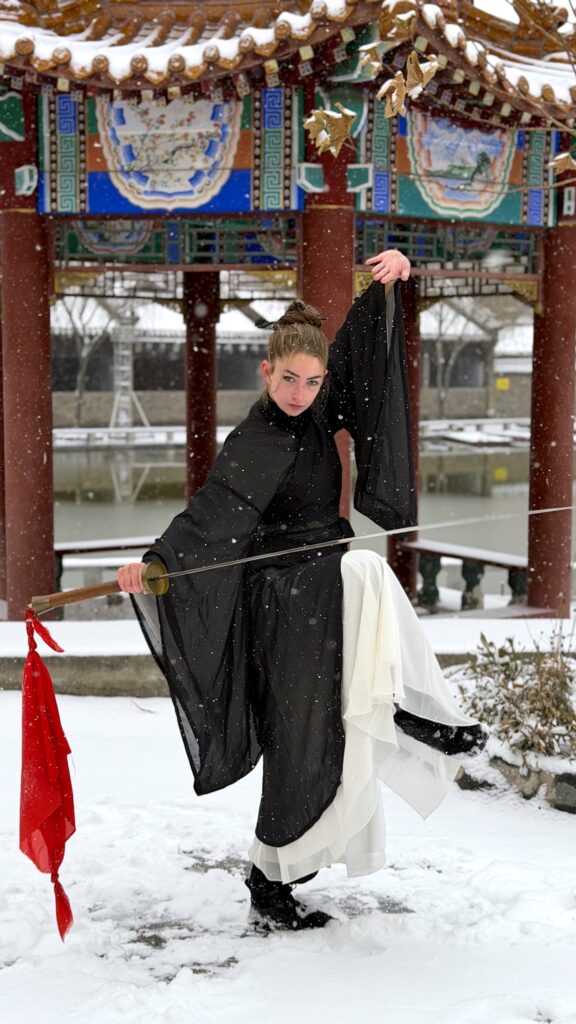
The Miao Dao (苗刀) is one of the most impressive and lesser-known traditional Chinese weapons. Often described as a Chinese long saber, the Miao Dao combines exceptional reach, cutting power, and speed, making it a formidable weapon both on the battlefield and in traditional martial arts training.
In this article, we explore the history, structure, training principles, and martial significance of the Miao Dao, and why it continues to attract serious practitioners today.

What Is the Miao Dao?
The Miao Dao is a two-handed Chinese saber characterized by its long, curved blade and extended handle. Unlike shorter sabers such as the Dao used in civilian martial arts, the Miao Dao was historically designed for military use, emphasizing reach, momentum, and decisive cutting power.
Key characteristics of the Miao Dao include:
A long, slightly curved blade
A handle long enough for two-handed grip
Forward-weighted balance for powerful cuts
Techniques emphasizing full-body coordination
Because of its size and structure, the Miao Dao requires strong foundational training, precise footwork, and correct body mechanics.
Historical Origins of the Miao Dao
The Miao Dao is most commonly associated with late Ming and Qing dynasty military systems, where it was used by elite troops against cavalry and armored opponents. Some historical records suggest that its development was influenced by encounters with long-bladed weapons from neighboring regions, while others emphasize its roots in Chinese battlefield saber traditions.
Regardless of its exact origin, the Miao Dao represents a period when battlefield efficiency and practicality were prioritized over ornamental weapon design. It was not a weapon for performance, but for survival and effectiveness.
Miao Dao vs Other Chinese Weapons
Compared to other traditional Chinese weapons, the Miao Dao stands out clearly:
Vs. Dao (short saber): Longer reach, greater power, requires two hands
Vs. Jian (straight sword): Less emphasis on finesse, more on cutting force
Vs. Qiang (spear): Blade-based cutting rather than thrusting dominance
This makes the Miao Dao unique: it bridges the gap between saber and pole weapon, demanding both strength and refined coordination.


Training Principles of Miao Dao
Training with the Miao Dao is not simply about learning techniques. It requires a deep understanding of body structure, timing, and power transmission.
Key training principles include:
Whole-Body Power
All Miao Dao movements originate from the legs and waist, not the arms. Power is transmitted through the spine into the weapon, creating heavy, decisive cuts.
Stability and Footwork
Because of the weapon’s length, footwork is critical. Practitioners train to maintain balance while advancing, retreating, and changing angles under load.
Elastic Strength
Rather than muscular tension, Miao Dao training develops elastic, connected strength, similar to other traditional internal and external Chinese martial arts.
Intent and Timing
The weapon rewards clarity of intent. Hesitation or poor timing quickly destabilizes the practitioner, making precision essential.
Miao Dao in Traditional Martial Arts Today
In modern times, the Miao Dao is preserved within traditional martial lineages, particularly those with strong military or Shaolin influences. It is not commonly taught to beginners due to its demands on structure, coordination, and awareness.
Today, Miao Dao training is valued for:
Building exceptional body strength
Developing advanced coordination
Improving understanding of weapon-body integration
Preserving classical Chinese martial knowledge
For serious practitioners, it offers insights that transfer directly into empty-hand training and other weapons.
Why Train the Miao Dao?
Training with the Miao Dao is not about spectacle. It is about:
Discipline
Structural integrity
Martial efficiency
Respect for traditional knowledge
Those who commit to its study often find that it refines not only their martial ability, but also their mental focus and physical organization.
The Miao Dao stands as a powerful symbol of traditional Chinese martial culture — practical, demanding, and deeply rooted in battlefield reality. As a long saber weapon, it challenges practitioners to move beyond surface technique and develop true whole-body power and clarity.
For those willing to train patiently and correctly, the Miao Dao offers a rare and rewarding path into the heart of classical Chinese weapon arts.