Ma Bu to Gong Bu: Transition Dynamics in Martial Arts
The transition from Ma Bu (Horse Stance) to Gong Bu (Bow Stance) focuses on the interconnected elements of Qi (vital energy), power generation, speed, and the use of sound (vocalisation) to enhance movement. These stances and the transition between them are fundamental in many martial arts, particularly those with Chinese origins.
Stance Fundamentals
- Description: Feet are approximately two shoulder-widths apart, parallel. The knees are deeply bent, as if sitting on a horse. The back is straight, and the weight is distributed evenly between both legs.
- Qi & Power: Ma Bu is a grounding stance. It develops leg strength, stability, and a strong connection to the earth. Qi is focused in the Dantian (lower abdomen), providing a stable centre. Power is generated from the legs and core.
- Focus: Stability, root, even weight distribution, core engagement.
Ma Bu (Horse Stance)
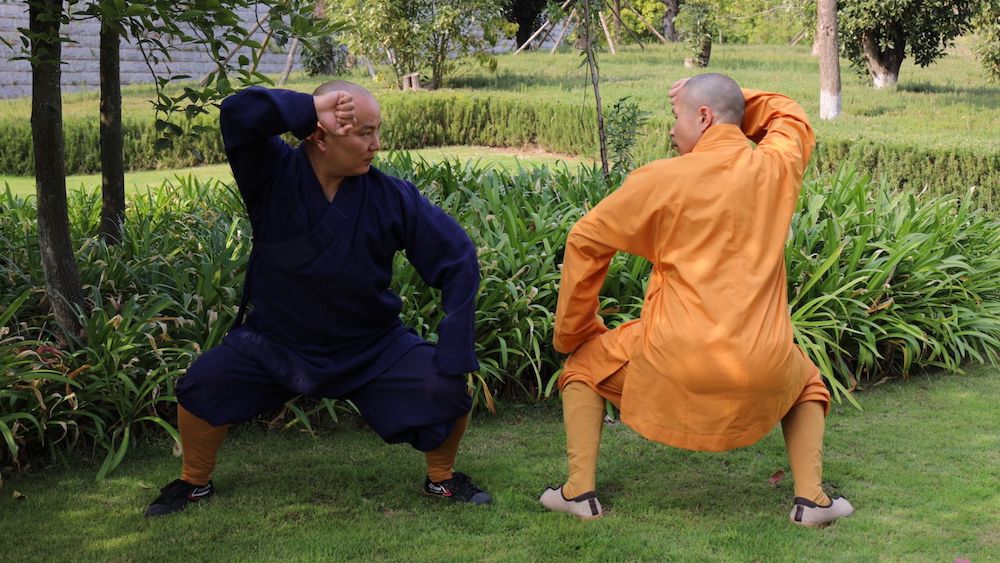
Gong Bu (Bow Stance)
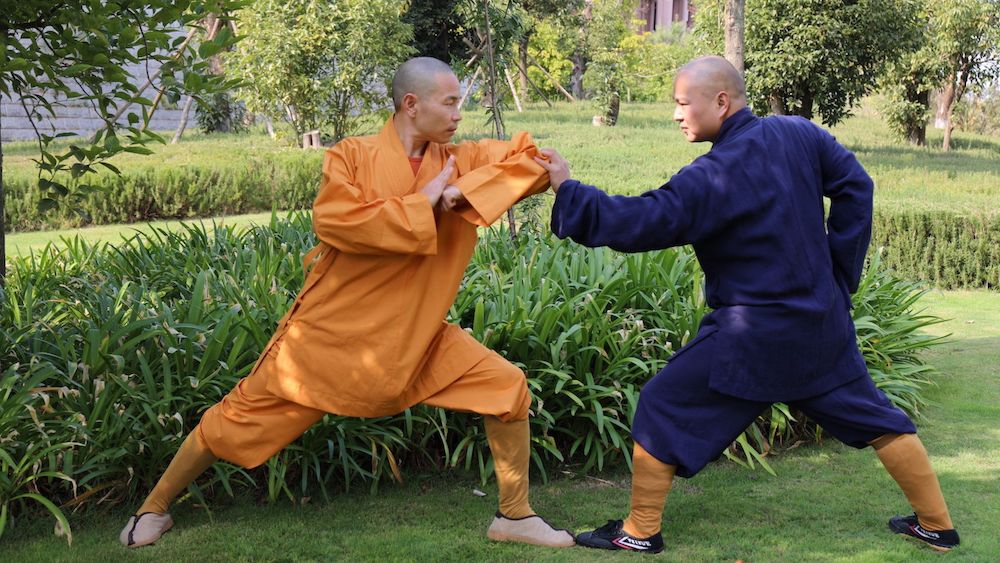
- Description: One leg is forward, bent at the knee (ideally with the knee aligned over the ankle). The rear leg is straight, providing support. The weight is predominantly (around 70%) on the front leg. The body faces forward.
- Qi & Power: Gong Bu is a more mobile stance than Ma Bu. Qi is still rooted in the Dantian, but with a greater emphasis on projection forward. Power is generated by pushing off the rear leg and transferring weight to the front.
- Focus: Forward projection, mobility, power transfer, alignment.
Ma Bu to Gong Bu: Transition Dynamics in Martial Arts
The transition from Ma Bu to Gong Bu is not merely a shift in leg position; it’s a dynamic process that involves a coordinated effort of the entire body, breath, Qi, and intent.
Key Elements:
- Initiation: The movement typically starts from the Dantian and core. This ensures that the power is generated from the center of the body, rather than just the limbs.
- Weight Shift: As you prepare to move into Gong Bu, begin shifting your weight subtly towards the leg that will be forward.
- Rear Leg Push: The primary driving force comes from the rear leg. Push off the rear leg to propel your body forward.
- Rotation: A slight rotation of the hips can add power and momentum to the transition.
- Alignment: Maintain proper alignment throughout the movement. Keep your back straight and your head up. Ensure the front knee stays aligned over the ankle.
- Coordination: Arms should coordinate with the leg movement, often moving in opposition to maintain balance and generate additional power.
Qi & Breathing
- Ma Bu (Preparation): Deep, diaphragmatic breathing. Inhale to fill the Dantian and establish a strong root. Focus the mind on the Dantian.
- Transition: As you initiate the movement, exhale sharply, engaging the core muscles. This assists in power generation.
- Gong Bu (Completion): Continue to breathe diaphragmatically, maintaining a stable Qi flow. Adjust your breath according to the next movement.
Power Generation
- Ground Force: The foundation of power in this transition is the connection to the ground. Pushing off the rear leg is crucial.
- Core Engagement: The core muscles act as a bridge between the lower and upper body, transferring power efficiently.
- Body Integration: The entire body must work as a unit. Avoid isolating the movement to just the legs.
- Focus (Yi): Direct your mental focus on the target (even if imaginary). This helps to channel your power effectively.
Speed
- Relaxation: Counterintuitively, speed is often enhanced by relaxation. Tense muscles hinder quick movement.
- Efficiency: Eliminate unnecessary movements. Streamline the transition to conserve energy and maximize speed.
- Acceleration: Focus on accelerating through the movement, rather than maintaining a constant speed.
- Intent: A clear and decisive intent can significantly increase the speed of the transition.
Sound (Vocalization)
Purpose: Vocalisation is not mandatory, but can be a powerful tool for enhancing the transition.
- Focus:* Directing mental focus and intent.
- Power Generation:* Coordinating breath and muscle engagement.
- Rhythm:* Setting the pace and timing of the movement.
Examples:
- Short, Sharp Exhalation: A short, sharp “Ha!” or “Hey!” as you push off the rear leg can help to engage the core and focus your power.
- Prolonged Tone: A longer, sustained tone can regulate breathing and maintain Qi flow throughout the movement.
Important Considerations for Sound:
- Natural: The sound should feel natural and arise from the body’s mechanics, not forced.
- Controlled: Avoid shouting or straining your voice.
- Intentional: The sound should serve a purpose, not just be random noise.
Training Drills
- Slow Motion Practice: Practice the transition slowly, focusing on proper form, alignment, and breath coordination.
- Incremental Speed Increase: Gradually increase the speed of the transition as your technique improves.
- Repetition: Repeated practice is essential for developing muscle memory and refining your technique.
- Partner Drills: Work with a partner to practice the transition in a dynamic context.
- Visualization: Mentally rehearse the transition, visualizing the correct form, breath, Qi flow, and the use of sound.
Common Mistakes
- Lifting Up/Down: Maintain a consistent height throughout the transition. Avoid bouncing up or down.
- Leaning Forward: Keep your back straight and avoid leaning forward from the waist.
- Tense Shoulders: Relax your shoulders and avoid unnecessary tension.
- Holding Your Breath: Breathe naturally and coordinate your breath with the movement.
- Lack of Focus: Maintain mental focus throughout the transition.
Ma Bu to Gong Bu: Transition Dynamics in Martial Arts
The transition from Ma Bu to Gong Bu is a fundamental movement in many martial arts. Mastering this transition requires a deep understanding of the interplay between stance mechanics, Qi, power generation, speed, and the potential use of sound. Focusing on the principles outlined in this blog and dedicating yourself to consistent practice can significantly improve your technique, power, and overall martial arts skill.
Continued Education Online
Stay Connected: I’d like to let you know about our online platform to continue your practice.
Virtual Classes: Schedule of virtual sessions and workshops.
Community: Access to forums and networking with other alumni.