The Power of Shaolin Buddhist Meditation
A Synthesis of Tradition and Modern Science
Shaolin Buddhist meditation, a cornerstone of the spiritual and physical discipline at the renowned Shaolin Temple, has long been revered for its profound impact on mental clarity, emotional stability, and overall well-being. Rooted in the ancient practices of Chan Buddhism, this form of meditation is a unique blend of mindfulness, physical posture, and breath control. Modern research increasingly supports the benefits of these ancient practices, offering a compelling synthesis of tradition and science.
The Origins and Philosophy of Shaolin Buddhist Meditation
The Shaolin Temple, established in the 5th century CE in Henan Province, China, is the birthplace of Shaolin Kung Fu and a significant centre for Chan (Zen) Buddhism. Chan Buddhism emphasizes direct experience and meditation as the primary means of realizing one’s true nature and achieving enlightenment. This practical and experiential approach to spirituality is deeply embedded in Shaolin Buddhist meditation practices.
Shaolin Buddhist meditation focuses on integrating mind, body, and spirit, achieved through cultivating mindfulness, breath control, and physical discipline. The practice is designed to harmonize the practitioner’s internal energies, known as Qi, and align them with the universe’s natural rhythms, fostering inner peace and spiritual insight.
Components of Shaolin Buddhist Meditation
Mindfulness (Nianfo)
- Definition: Mindfulness in the Shaolin tradition involves maintaining a focused awareness of the present moment, whether through seated meditation, walking, or even during martial arts practice. This continuous mindfulness helps quiet the mind and clarifies the practitioner’s thoughts and emotions.
- Scientific Support: A study published in JAMA Internal Medicine (2014) found that mindfulness meditation significantly reduces symptoms of anxiety, depression, and pain, suggesting that Shaolin mindfulness practices can have substantial mental health benefits.
Physical Posture and Movement
- Definition: Shaolin meditation emphasises specific postures, such as sitting in a cross-legged position with a straight spine, which is believed to facilitate the flow of Qi and support long periods of meditative practice. Additionally, when practised mindfully, Shaolin martial arts movements become a form of moving meditation that integrates body and mind.
- Scientific Support: A review in The Journal of Alternative and Complementary Medicine (2011) found that Tai Chi, a practice with principles similar to those in Shaolin martial arts, can improve balance, reduce the risk of falls, and enhance overall physical and mental health.
Breath Control
- Definition: Proper breath control is integral to Shaolin meditation, where deep, rhythmic breathing techniques are used to regulate the flow of Qi and maintain physical and mental equilibrium.
- Scientific Support: Research from Frontiers in Psychology (2017) highlights how controlled breathing practices can reduce stress, enhance emotional control, and improve cognitive function by influencing the autonomic nervous system.
Emotional and Mental Clarity
- Definition: The ultimate aim of Shaolin Buddhist meditation is to achieve a state of mental clarity and emotional stability, allowing practitioners to transcend ordinary consciousness and connect with deeper spiritual truths.
- Scientific Support: A meta-analysis published in Psychological Bulletin (2017) demonstrated that meditation practices similar to those in the Shaolin tradition can significantly improve emotional regulation and reduce symptoms of psychological distress.
Modern Research Supporting Shaolin Buddhist Meditation
Modern science has increasingly focused on the effects of meditation practices similar to the Shaolin tradition. For instance, a landmark study published in Nature Reviews Neuroscience (2015) examined how meditation alters brain structure and function. The researchers found that long-term meditation practices can lead to structural changes in areas of the brain associated with attention, emotional regulation, and self-awareness.
Another significant study published in Psychosomatic Medicine (2016) explored the impact of meditation on the immune system. The findings indicated that mindfulness-based practices, akin to those used in Shaolin meditation, can enhance immune function, suggesting that regular meditation may improve mental health and bolster physical resilience.
Mental Health Enhancement
Regular practice of Shaolin meditation has been shown to reduce stress, anxiety, and depression. The mindfulness component helps manage negative emotions and cultivate a positive outlook on life.
Emotional Stability
By fostering a deeper connection with one’s inner self, Shaolin meditation helps practitioners maintain emotional balance, even in the face of life’s challenges.
Spiritual Growth
Beyond its physical and mental benefits, Shaolin Buddhist meditation is a profound spiritual practice that guides practitioners toward self-realization and a deeper understanding of their place in the universe.
Cognitive Improvement
Meditation enhances focus, memory, and cognitive flexibility, making it a valuable practice for maintaining mental sharpness in both professional and personal contexts.
Physical Health Benefits
Integrating breath control and physical posture in Shaolin meditation can improve cardiovascular health, respiratory efficiency, and overall physical well-being.
Shaolin Buddhist meditation is a time-honoured practice with many mental and physical benefits. With its roots in the rich tradition of Chan Buddhism and the physical discipline of Shaolin Kung Fu, this meditation practice is uniquely positioned to cultivate inner harmony, mental clarity, and spiritual growth. Modern research increasingly supports the effectiveness of these practices, validating what Shaolin monks have known for centuries: that meditation is a powerful tool for achieving a balanced and fulfilling life. Whether seeking to improve mental health, enhance cognitive function, or deepen spiritual practice, Shaolin Buddhist meditation provides a comprehensive path toward achieving these goals.
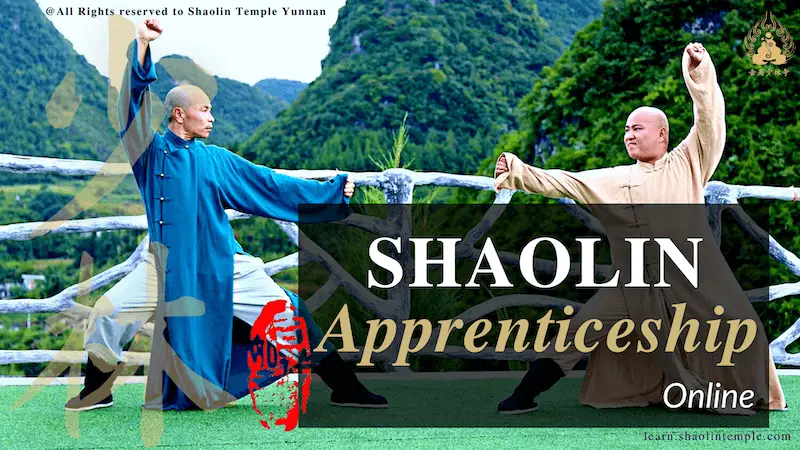
Shaolin Temple Shaolin Apprenticeship Online provides you with both Warrior and Wellness paths to ensure your Online Learning will make you a complete Martial Artist with excellent health.
DISCLAIMER: THIS WEBSITE DOES NOT PROVIDE MEDICAL ADVICE
The content provided on this website, including but not limited to text, graphics, images, and other material, is solely for informational purposes. None of the material on this site is intended to be a substitute for professional medical advice, diagnosis or treatment. It is always recommended to consult with your physician or other qualified healthcare provider before undertaking a new healthcare regimen or if you have any questions regarding a medical condition or treatment. Never disregard professional medical advice or delay seeking it because of something you have read on this website.